
Youngstown Previous Residents by Era
The strongest backward trail starts with the current parcel and moves through the sources that fit its era: parcel and legal description, recorded ownership, a reverse directory if one exists, the matching alphabetical directory, then census, newspaper, probate, obituary, map, or permit evidence. This sequence is more reliable than assuming the current Youngstown house number always existed. Each source captures a different moment and must retain its own date.
| Source | Years it covers | Where held | What it adds |
|---|---|---|---|
| Recorder documents | Early 1800s forward; electronic index conservatively January 1985-present | Recorder, 13 public terminals, Laredo | Ownership transfer and legal description. |
| Current parcel record | Current appraisal and tax system | Auditor portal or counter | Starting parcel, sales, owner fields, and legal details. |
| City directories | 1869, 1872, 1875/76, and 1877-present holdings; verify each volume | MVHS, PLYMC, selected digitization | Dated address, household head, and occupation clue. |
| Reverse directories | Selected later years only | MVHS and PLYMC | Address-to-name starting point. |
| Federal census | Released on a 72-year schedule | NARA, library, and genealogy services | Household snapshot with variable address precision. |
| Sanborn and permit files | Edition and record availability vary | MVHS, PLYMC, Building Inspection | Structure, lot, demolition, or alteration chronology. |
Start with a current parcel even if the target is much older. It supplies the legal-description bridge needed when a historic source uses a lot, block, subdivision, or an earlier street form. A directory or map can then add the household or building layer without being mistaken for a title record.
Note: The best starting source changes by era, but the legal description remains the main continuity check.
Anchor Youngstown Previous Residents to a Parcel
The Mahoning County Auditor provides the first stable identifier: parcel number, property location or situs, deeded-owner and tax-payer fields, sales or acquisition information, legal description, improvements, and a GIS handoff. The situs names the taxable property. The deeded-owner and tax-payer addresses are correspondence fields. They can differ from each other and do not establish a current household connection.
The Auditor view below comes from the Mahoning County Auditor.
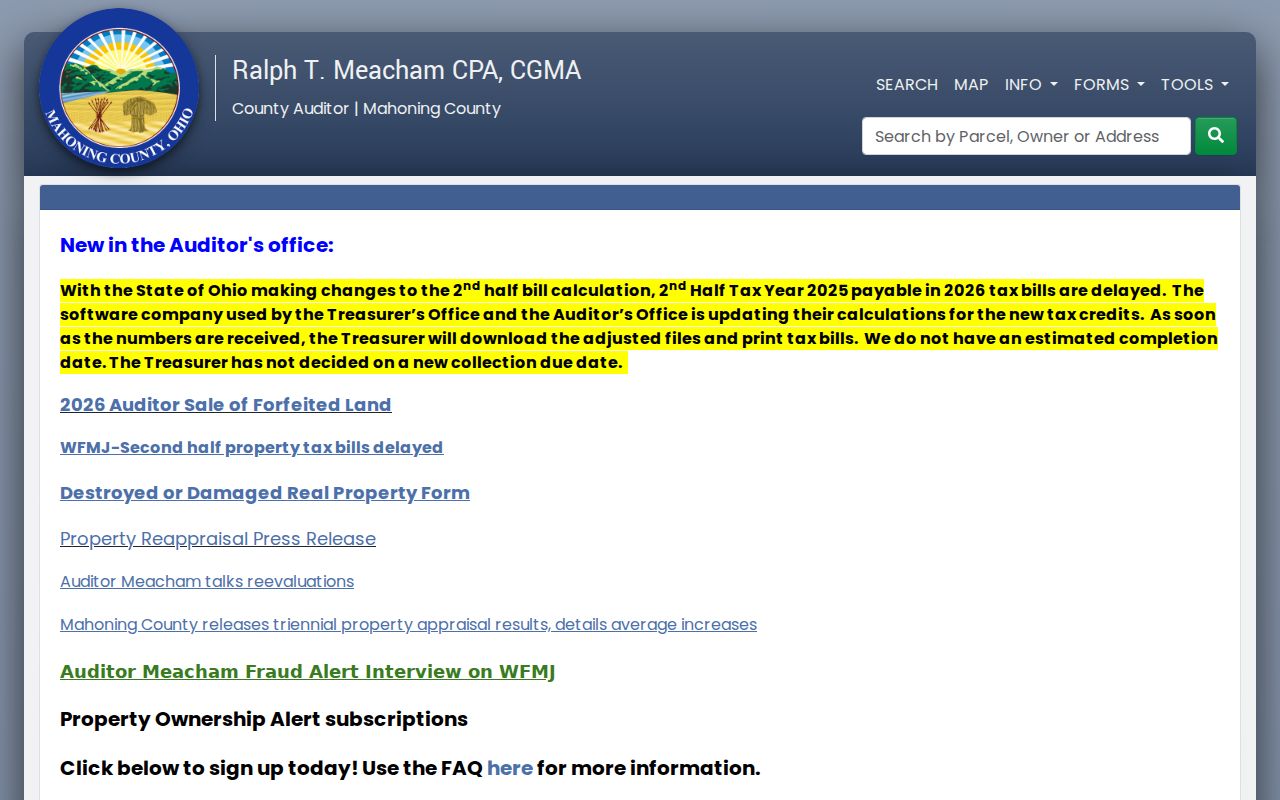
Save the parcel number and legal description before changing systems. The Auditor office is at 120 Market Street, first floor, and is open weekdays from 8:00 a.m. to 4:30 p.m. Its counter is the local fallback for the current property record when an online field needs confirmation.
Trace Youngstown Previous Residents Through Deeds
The ownership half of the past-resident trail runs through the Mahoning County Recorder. Begin with the current owner, acquisition date, and legal description from the parcel card. Then use the Recorder's party and document index to find the instrument that brought the owner into the chain. Preserve the grantor, grantee, document type, recorded date, document number or book and page, and legal description at every turn.
- Open the Auditor parcel record and write down its legal description, current owner, and acquisition or sale details.
- Search the current owner in AVA by party name and use a recorded date or document number when known.
- Read the instrument details, then use the seller's earlier purchase role and the repeated legal description to find the preceding transfer.
- Repeat one document at a time. Check for corrective deeds, exempt transfers, parcel splits, combinations, or land-contract entries before treating a sale list as the entire chain.
- When the electronic index ends, move to the Recorder's public computers and historic material during office hours.
- Grantor / grantee
- The grantor transfers an interest; the grantee receives it in the recorded instrument.
- Chain of title
- The linked sequence of recorded transfers for the same land, checked document by document.
- Legal description
- The lot, block, subdivision, metes-and-bounds, or other recorded land identity that survives a changed street form.
Ownership and residence are different facts. A deed establishes a dated recorded transaction, while a directory, census, or obituary can provide a separate dated household or life-event clue.
Handle Youngstown Recorder Cutoffs
The Recorder's About page says electronic indexes begin in January 1985, while Laredo access messaging describes 1980-present. January 1985 is the conservative online-index boundary for Youngstown previous residents research. Do not turn the difference into an invented start date. Documents reach to the early 1800s, but earlier work belongs at the office through the historic material and its 13 public computers.
The Recorder office history and access route appear in this image from the Mahoning County Recorder About page.
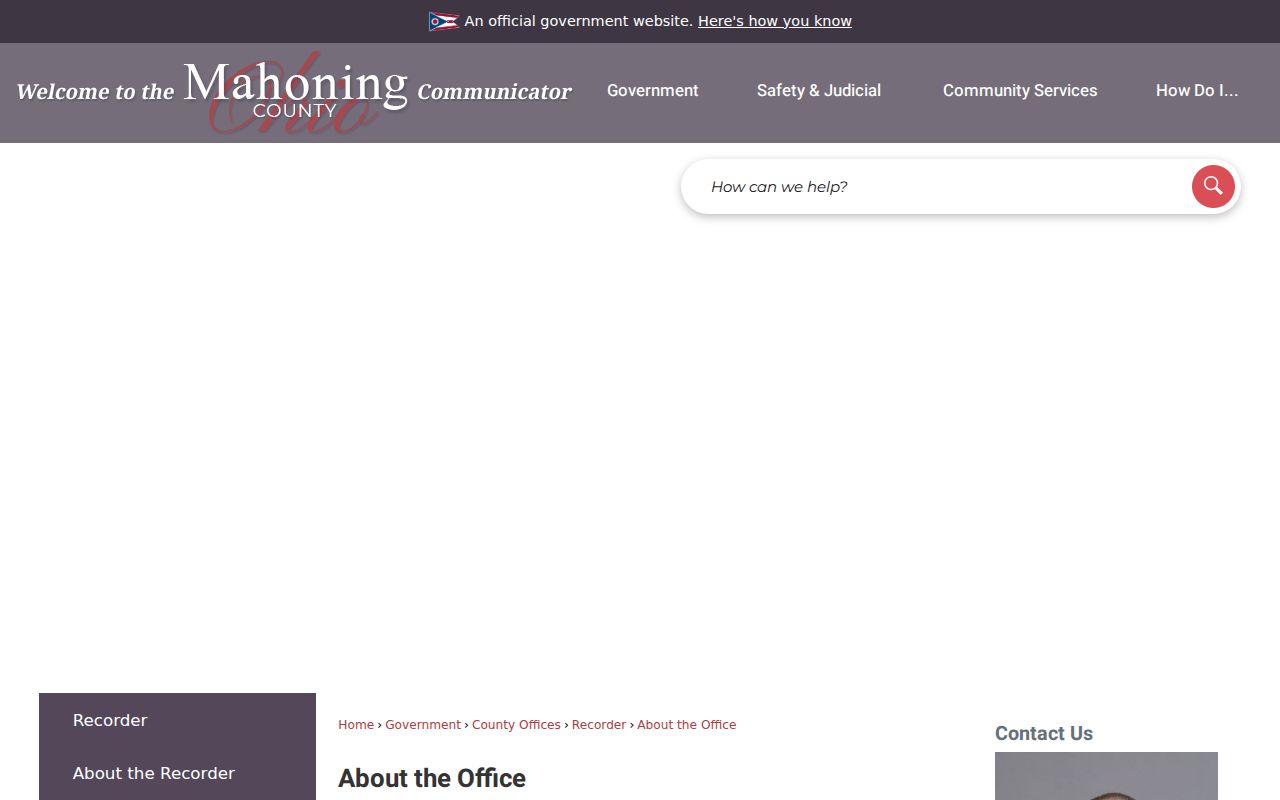
Free Laredo Anywhere signup is described by the Recorder as a mail, fax, or in-person process with one business-day setup. Staff do not search records on a requester's behalf. Bring a party name, date, book and page, document number, or subdivision detail, since AVA does not enable address or parcel searching.
Note: Record the source's access date and the cited document details whenever an online index supplies a lead.
Pair Youngstown Directories With Census
For previous residents, use the reverse or criss-cross volume to turn an address into a name for one edition. Then check the alphabetical volume for the same year, including residence notation, occupation, or widow notation where present. Search nearby annual editions for a move, name variation, or changed description. Pair that run with the closest released federal census, but do not assume every census provides the same street precision.
MVHS holds Youngstown city directories for 1869, 1872, 1875/76, and a sequence described as 1877-present, with selected years extending beyond the City. It also holds selected telephone and reverse directories. Confirm the exact title and year before relying on it. The collections themselves are treated in more detail with the Youngstown city directory collections.
Question: Can an old directory prove who lived in a house? It shows that a publisher placed a named entry at an address during that edition's compilation period. Cross-check it with the alphabetical listing and another dated source before drawing a larger conclusion.
Date Youngstown Previous Residents With Maps
Sanborn fire-insurance maps can connect an older directory address to a building, lot, street name, or development pattern. The maps show structure, material, footprint, and street conditions at the survey date. They do not name a household. Ask PLYMC or MVHS for the relevant Youngstown edition rather than claiming an unverified map year, then compare it with the legal description and directory street section.
Permit Inquiry Manager is the first current route for a building, certificate of occupancy, demolition, mechanical, or property-maintenance record. For older material, Mahoning Building Inspection accepts a precise public-record request at 330-270-2894. Its form describes $0.10 per copied or faxed page plus mailing and payment before release. A permit proves building activity, not a household presence.
Note: An address-continuity check should combine the current street list, lot or legal description, dated map, and directory street index.
Trace Youngstown Previous Residents Before 1846
Mahoning County was created on February 16, 1846, from southern Trumbull and northern Columbiana County townships. For an address-area trail before that date, land or probate material may sit in a parent-county source even when the modern location is Youngstown. Mahoning Valley Historical Society also holds early county government materials from 1846, plus local land transactions from 1827 and a Samuel Bryson justice-of-the-peace ledger from about 1805 to 1810.
This is a records-boundary story, not evidence that the chain is lost. No authoritative courthouse-fire or flood loss affecting Youngstown resident records was found in the research. The current Market Street courthouse complex dates from the early twentieth century, while older documents remain a custodian and county-boundary question.
Note: A modern Youngstown label does not determine which county held the land or probate record before 1846.
Finish Youngstown Previous Residents Trails
Probate, obituaries, cemetery records, and marriage records can help establish a dated endpoint or family connection after a directory and deed trail has narrowed the person and place. Mahoning Probate holds estate, guardianship, marriage-license, and court material, while PLYMC's newspaper and local-history routes lead to local scans and obituaries with database-specific access conditions. A newspaper mention should retain its date and source, not be read as a current address.
The YSU Oral History Collection offers another historical context layer, with more than 1,100 interviews begun in 1974 about the Mahoning Valley's communities, migration, steel, railroads, and civic life.
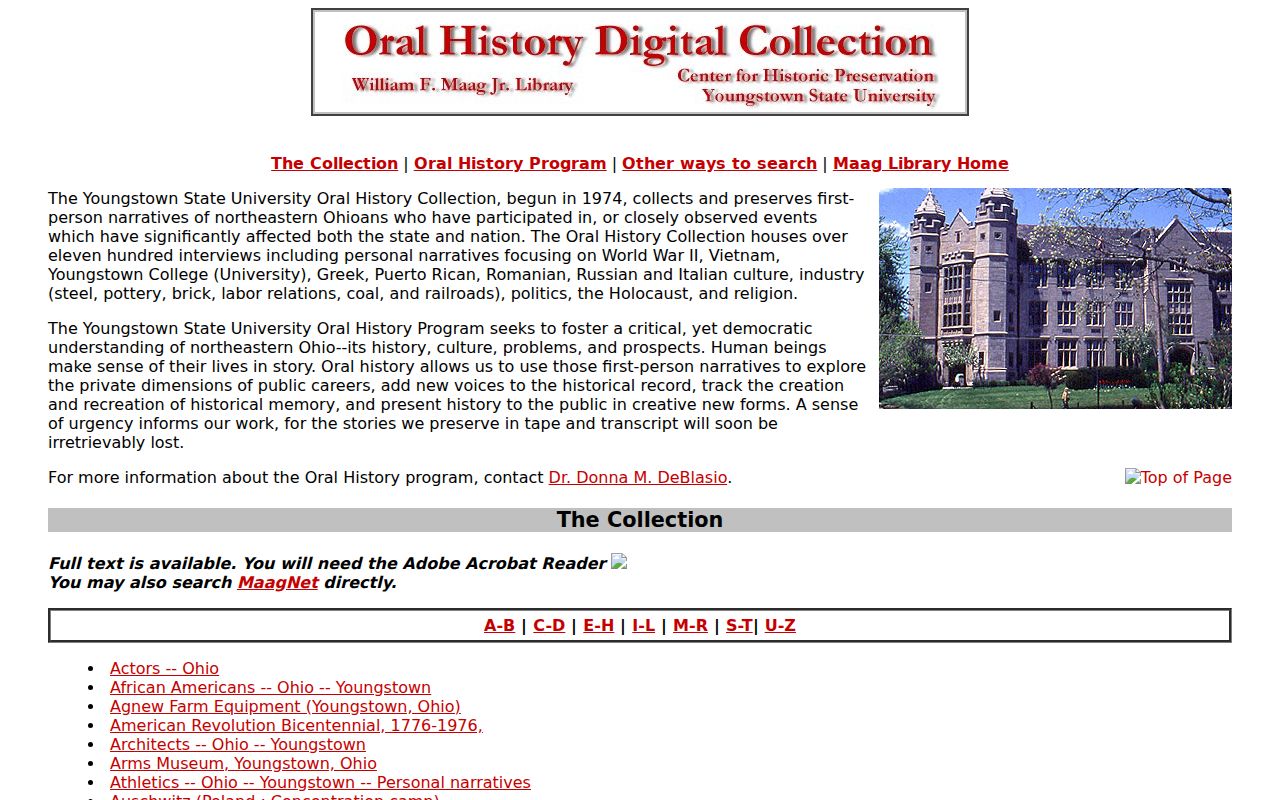
Oral histories may help frame an address-era search or identify a collection, but they are not a current-resident service. Request access from the archive and corroborate any address detail through a dated custodian record.
The Mahoning marriage route shows the Probate pathway for licenses and copies.
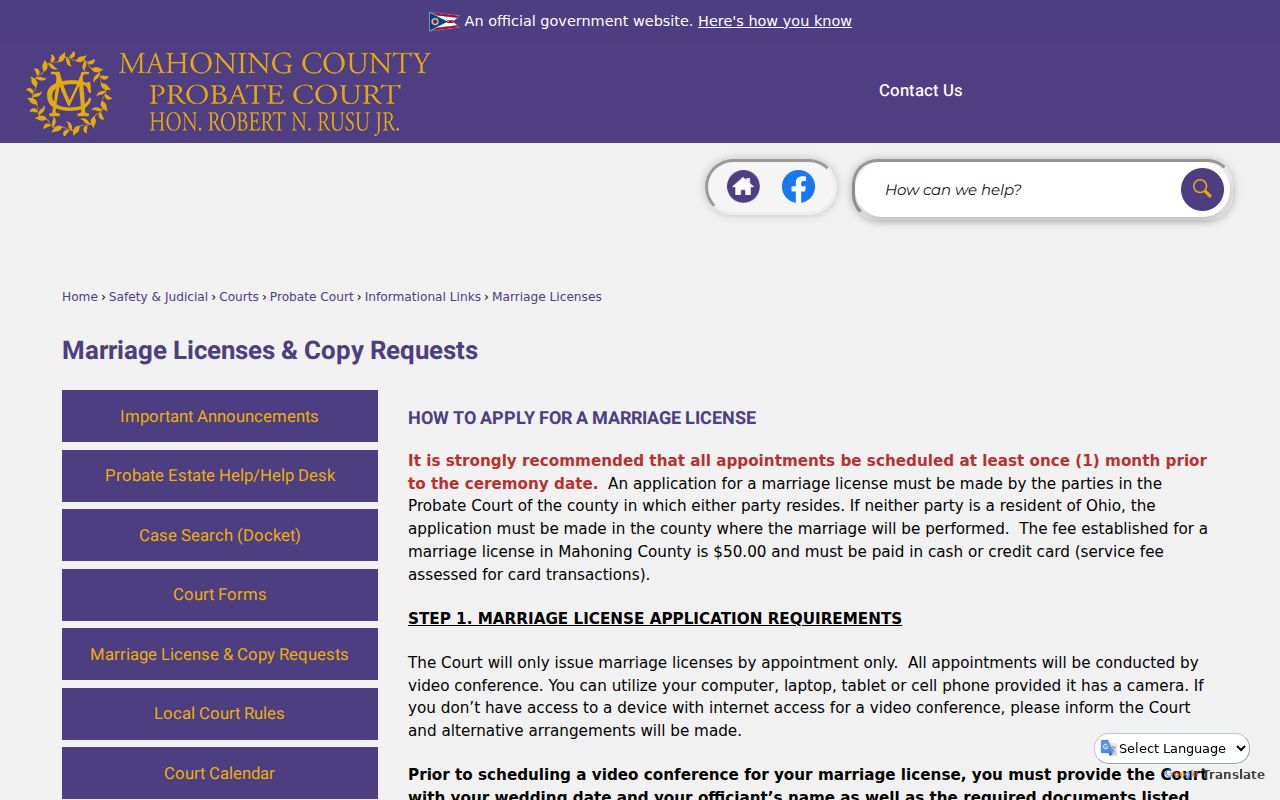
A marriage record can document a dated event and relationship. It does not, by itself, establish that either party was at the target address.
Respect Youngstown Previous Residents Limits
Past residents research is best used for house history, family history, estate questions, and local history. It is not a means to identify private present-day household members. Ohio restricts protected voter records, driver information, sealed court material, medical information, and Safe at Home addresses. A tax-payer mailing field, a deed party, a probate caption, or a directory entry has the narrow date-specific meaning given by its keeper.
Lawful use. Youngstown previous residents records support personal and historical research. Do not use a past address trail to stalk, harass, track, or harm any living person.
When an office has a record but no online image, request the existing identified item from the custodian. The Ohio Public Records Act, ORC 149.43, provides access to nonexempt existing records but does not require an office to perform an open-ended person search.